

Geography Department
The Geography Department is the home for undergraduate courses in Geography (Single Honours and Combined Honours), Environmental Science (Single Honours), Tourism (Combined Honours) and Tourism Management (Single Honours). We also offer a popular and successful Masters course in Environmental Management.
We are the smallest department in the University and we believe that we’re also the friendliest. We have an established reputation for excellent teaching and in offering students a level of support that isn’t always found in larger departments in larger universities. This was confirmed in the 2010 and 2011 National Student Surveys where Geography at Liverpool Hope University was rated in joint first place with 100% student satisfaction. In addition to being excellent teachers we are all active researchers and our own research feeds through to our teaching at every level.
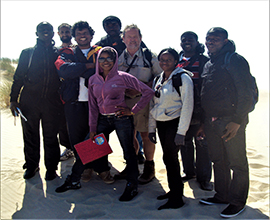
The Geography Department is also host to the UK Sand Dune and Shingle Network. This internationally renowned group undertakes consultancy and advisory work for agencies such as Natural England and the Countryside Council for Wales.
| Undergraduate | Postgraduate | |
| Subject | BSc Environmental Science | MSc Environmental Management |
| BSc Geography | ||
| BSc Tourism | ||
| BSc Tourism Management |
Paul Rooney
Head of Department
Email: rooneyp@hope.ac.uk
Department Office
Mary Rice
FML202
0151 291 2168
All the Geography Department are active researchers and regularly publish in international journals and present papers at high-level conferences around the world. This means that our teaching is 'research-led' and is underpinned by the latest advances in the subject.
Our research specialisms include:
Recent publications by members of the Geography Department include:
Axon, S., Speake, J. and Crawford, K. (2012) “At the next junction, turn left”: Attitudes towards Sat Nav use’. Area, 44 (2), 170-177
Chapman, A. & Speake, J. (2011) 'Regeneration in a Mass Tourism Resort: The changing fortunes of Bugibba, Malta', Tourism Management, 32, 482-491
Chapman, A. and Light, D. (2011) The ‘heritagisation’ of the British seaside resort: The rise of the ‘old penny arcade’, Journal of Heritage Tourism 6 (3), pp 209-226
Crawford, K.R. and Black, R. (2012) Visitor understanding of the geodiversity and the geoconservation value of the Giant's Causeway World Heritage Site, Northern Ireland. Geoheritage, in press
Light, D. and Young. C. (2011) ‘Socialist statuary as post-socialist hybrids: following the statues of Dr Petru Groza in Romania’, Journal of Historical Geography, 37(4), 493-501
Light,D. (2012) The Dracula Dilemma: Tourism, Identity and the State in Romania, Ashgate, Farnham
Rooney. P. (2010) Changing perspectives in coastal dune management. Journal of Coastal Conservation: planning and management. 14 (2) 71 - 73
Rooney, P.J., Houston, J.A. and Weaver, G. (2011) The Conservation and Management of Sea Buckthorn (Hippophaë ramnoides) in the UK. Sand Dune and Shingle Network, Occasional Paper no 3, Liverpool Hope University, Liverpool
The Department is also home to the ‘Landscape’ research group which organises a regular research seminar series. These are given by members of the Department and external speakers and are regularly attended by undergraduate students. This year's programme is as follows (all seminars are 1-2pm in FML 211):
Tuesday 9 October, Prof Norb Psuty (Rutgers University, USA) "Sediment Management: A Recurring Theme and a Potential Unique Response"
Tuesday 6 November, Dr Duncan Light (Liverpool Hope University) "His name lives on: Urban landscapes, place names and memory in post-communist Bucharest"
Tuesday 20 November, Dr Anya Chapman (Liverpool Hope University) "Reinventing the (Ferris) Wheel: The varying fortunes of British seaside funfairs"
Tuesday 4 December, Paul Rooney (Liverpool Hope University) "Dune Conservation and Military Use"
Tuesday 8 January 2013, Dr Janet Speake (Liverpool Hope University) "I've got my Sat Nav, it's alright: Users' attitudes towards and engagement with technologies of navigation"
Tuesday 29 January 2013, Dr Kevin Crawford (Liverpool Hope University) "Geoconservation, Protection and Management of Limestone Pavements in Great Britain"
Tuesday 16 February 2013, Stephen Axon (Liverpool Hope University) "Addressing Climate Change at the Community Level: Public Attitudes Towards Community-based Carbon Reduction Strategies"
Tuesday 5 March 2013, Dr Tim Acott (University of Greenwich) "Sense of Place and Marine Fishing along the English Channel"
Click here to download the Research Seminar Programme as a pdf file
![]() |
Senior Lecturer and Acting Head of Geography Room: FML 202 0151 291 3933 |
![]() |
Senior Lecturer in Physical Geography Room FML206 0151 291 3865 |
![]() |
Lecturer in Tourism |
![]() |
Senior Lecturer in Human Geography Room: FML206 0151 291 3594 |
![]() |
Mary Rice Departmental Administrator Room: FML 202 0151 291 2168 |
|
Coastal Network Assistant 0151 291 3885 |
Geography is one of the most exciting and fast-moving academic subjects. It is also one of the most relevant to the world around us. A training in Geography helps us to understand how the physical world works; how people interact both with each other and with the physical world; how landscapes (both physical and human) evolve; and how people interact with the environment and the ways in which the environment needs to be managed and conserved. No other subject takes in so many different perspectives and brings them all together to create a unique way of looking at and understanding our world. Whether your interests are more towards physical geography or human geography or the environment, you will find that we offer you the chance to develop your interests and develop an enriched understanding of what is taking place on our planet.
Tourism is the world’s largest industry, worth over $3 trillion annually worldwide, and has become one of its biggest sources of employment. Tourism is something which has shaped the world as we know it today and continues to have huge impacts on people, economy and the environment.
Studying tourism opens the door to understanding one of the forces that has shaped the modern world. In addition, there is no better city in which to study Tourism than Liverpool. The legacy of Capital of Culture in 2008 has made Liverpool one of the most dynamic and exciting cities in the country and it continues to develop new arts, heritage, and cultural attractions, retail developments and luxury hotels. It is an ideal ‘laboratory’ in which to study the changing nature of contemporary tourism
You will come across a wide variety of teaching situations on the Geography, Tourism and Environmental Science courses. During the first year, all students come together for formal lectures.
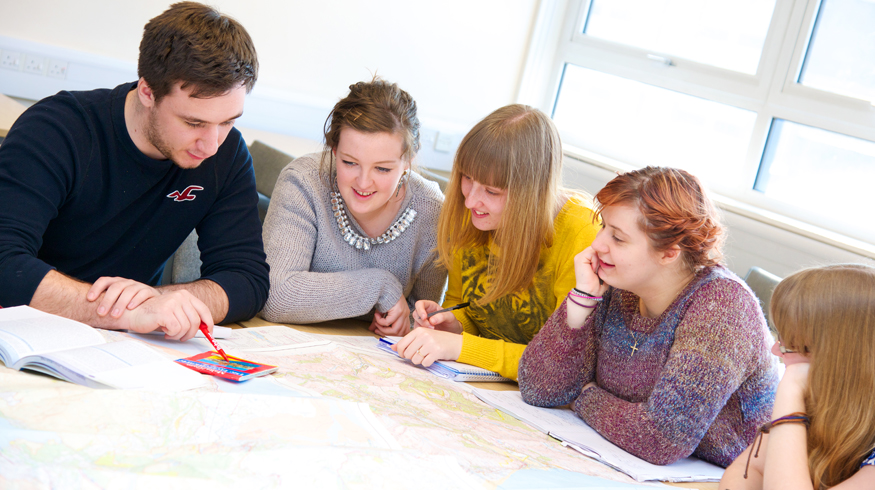
Students are also assigned to a small seminar group with a designated tutor who is responsible for their academic welfare throughout the year. In the second and third years, similar formats are adopted, depending on the number of students on a unit. Some units are largely run as lectures, others take a more workshop/seminar approach, others are entirely taught through fieldwork.
Most units are assessed using a mixture of coursework and exams, although there are a number of units which are assessed 100% through coursework. There are many different types of coursework assessment, including essays, report writing, group and individual presentations, fieldwork assignments, poster presentations, and brochure analysis.
We are a small and friendly team of tutors with a wide range of academic interests and specialisms. We take pride in being accessible to students and offering them a level of support which isn’t always found at larger universities. We have an established tradition of accepting students with a diverse range of entry qualifications and an excellent record of supporting them in attaining a degree at the end of three years study. One of the most common comments from our graduating students is how committed and helpful the tutors have been during their time at Hope. The quality of student support is indicated in the excellent scores the Geography Department receives in the National Student Survey.
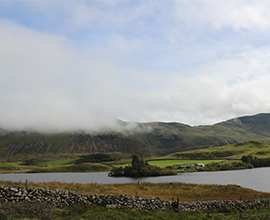
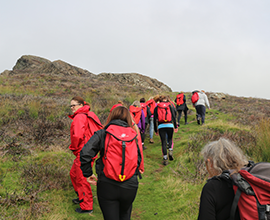
Yes! Fieldwork is an enjoyable and essential part of Geography, Environmental Science and Tourism. It is a way of gaining important skills and experience. In the first year, all students take part in a week’s fieldwork in North Wales. Geography/Environmental Science students look at aspects of the physical and human environments in a remote rural area, while tourism students look at tourism demand and participation in a rural area. There are also day visits to the local area (Liverpool, Chester, New Brighton and the Sefton Coast).
In the second and third years, the fieldwork component depends on the individual options – some units have no fieldwork element, some have one-day fieldtrips and some include residential fieldwork. Students taking BSc Geography will take part in an ‘International Fieldwork’ course (residential fieldwork either in Malta or Romania). Tourism and Tourism Management students will visit Malta for a week in their third year.
Students with disabilities are not excluded from fieldwork, and special arrangements will be made for them depending on their particular needs.
Students need access to appropriate learning resources and for most courses there is a recommended course text. These are available in the library but students are advised to buy certain key books – many students share this expense or find second hand copies. On fieldwork, for safety and comfort reasons, students will need access to waterproof outer clothing, a rucksack and, for most locations stout, waterproof boots. In North Wales this equipment can be borrowed from Hope’s field centre. Students are advised on these needs early on the course.
A degree in Geography opens the door to a wide range of careers - some specifically related to Geography, or other more general careers in business, management and finance. Many employers value the 'all-round' abilities of Geography graduates.
In recent years our students have got jobs such as:
In addition, many of our graduates go on to train as Geography teachers and a number of them are now Heads of Geography in schools around the country.
Increasing numbers of our students go on to postgraduate study. We offer a Masters courses within the Geography subject area in Environmental Management. Other students have gone on to Masters courses at other universities in subjects such as Hazard Management, Central and Eastern European studies, Planning Studies and Cultural Geography. A number of our graduates have also gone on to doctoral level (PhD) study.
A degree in Tourism or Tourism Management opens the door to a wide range of careers. Possible careers include:
In addition a degree in Tourism gives students a wide range of transferable skills which open up career opportunities in the wider private/commercial sectors. There are also increasing opportunities to study tourism and leisure at postgraduate level.
"Geography at Liverpool Hope University has given me the generic skills any future employer would seek. The course was enjoyable and interesting throughout. The support and help received from tutors was second to none.”
(Ben from Durham, graduated 2010)
The Geography degree at Liverpool Hope University gives you the best experiences and opportunities for life in the real world. The fieldtrips are amazing and the tutors are so so helpful and friendly and their knowledge is outstanding!!
(Sarah from Liverpool, graduated 2010)
“The geography course at Liverpool Hope University has been a wonderful experience overall, in which I have gained a lot of knowledge alongside making lifelong friends”
(Olga from Ireland, graduated 2010)
"over the 3 years studying geography at Hope, the course has covered a wide range of different and interesting topics with enthusiastic lecturers. Over the 3 years the course gives you the chance to have a specific focus or a bit of everything!"
(Mark from Yorkshire, graduated 2010)
"What an experience! From day one everyone involved at Liverpool Hope made my time there both a happy and enjoyable one. Here you are not just a number; the lecturers are truly interested in your development and can be approached on all levels. I would definitely recommend the university"
(Jak from Liverpool , graduated 2012)
" One of the best decisions I made when I left college was choosing a subject which was interesting and fulfilling. When I chose to study geography at Hope I found that the reason it was so interesting and fulfilling was because the lecturers that taught the subject where passionate and interesting as well. If I had the time and money I would easily come back and do it all over again just for the fun of it."
(Mark from Widnes, graduated 2012)